Wednesday, 5 March 2014

Disruptive technologies for a read/write society and the reverse engineering of objects

I recently gave a talk at the ThinkTwice Conference "Disruptive technologies for a read/write society and the reverse engineering of objects" [Slides]

Society and government are read and write. We can view them complex systems or black boxes, make assumptions and models about how they work and then create our own APIs (application programming interfaces) and apps.
Disassembly and repair teach engineering so changing the status quo can be as simple as ignoring the 'void warranty' sticker and taking things apart.
People can now create their own API (application programming interface) to government and come up with novel ways to be civically engaged. People that want to start or engage in a dialogue can create civic apps or release a technologically disruptive invention.
Depending on the problem, starting the process of 'achieving change' may be as simple as looking for a technical and symbolic intervention which fills a structural hole and empowers a group of people.


Also here are my speaker's notes:

Disruptive Technologies for a read-write society and the reverse engineering of objects
  1. Introduction
Good morning everyone, this morning I am going to be talking about 'Disruptive technologies for a read/write society and the reverse engineering of objects'- a topic that I am very passionate about. But before we get into that first let me introduce myself and tell you a little bit about what I have been doing for the past few years. I am an Electronic Engineer, Activist, Hacker, Maker. I studied Engineering at Durham University (2006), London Hackspace (August 2010), UK Student Movement @ UCL Occupation (November 2010), Sukey (January 2011), Occupy London Tech (October 2011), Occupy Geneva, Occupy Frankfurt (January 2012), Occupy Wall Street (May 2012), Cryptoparty (September 2012), Hurricane Hackers (October 2012). Open Source Ecology Project (November 2013), Nomadic (January 2013), C-base (January 2013) Currently a Hacker in Residence at a small Hackerspace / 3D printing shop in Mitte, Berlin.

Ok so back to the theme of the talk. I am proposing that society and government are read and write. We can view them complex systems or black boxes, make assumptions and models about how they work and then create our own APIs (application programming interfaces) and apps.
Disassembly and repair teach engineering so changing the status quo can be as simple as ignoring the 'void warranty' sticker and taking things apart.
People can now create their own API (application programming interface) to government and come up with novel ways to be civically engaged. People that want to start or engage in a dialogue can create civic apps or release a technologically disruptive invention.
Depending on the problem, starting the process of 'achieving change' may be as simple as looking for a technical and symbolic intervention which fills a structural hole and empowers a group of people.
So let's begin by looking at
  1. Read–Write (RW) Culture
  • People participate in the creation of their culture and the re-creation of their culture as opposed to Read Only Culture where culture is only consumed but the consumer is not a creator.
  • Read-Write culture (RW) entails a reciprocal relationship between the producer and the consumer for example taking works, such as songs, and appropriating them like remixing a song on youtube for inclusion in a meme or viral video which says something different.
  • And so digital technologies provide some of the tools for reviving Read/Write (RW) culture and democratizing the means of production. But why stop in the digital world?
  • Void-warranty stickers are a symbol of how manufacturers don’t want consumers to open their devices.
  • In the a read-write society people create their own content, own software, own infrastructures, own hardware. And thus they create their own realities, their own truths, their own society.
  • Can an individual create the infrastructure that she needs in order to meet basic needs?
  • How hardcore is our DIY? How much can we make on our own?
  • Currently our way of life requires collaboration and co-dependance on non-free regimes and the suffering of others, what we refer to as externalised costs. As we try to increase our understanding of the distribution of wealth and work in the world and increase our empathy it might make sense to look at what we can make locally to reduce the cost and the damage to the health and lives of other people and to the planet.
  • It is important to draw links between this new form of creativity and expression in the light of the narrative developed around the War on Piracy. Similar to the “War on Drugs”, “War on Terror”, “War on Hackers”, this kind of US political rhetoric and discourse frames the re-appropriation and recreation of culture as an act of war.
  • Further, this “war on hackers” is actually just the first salvo in the war on general-purpose computing. To paraphrase Cory Doctorow's “The Coming War on General Computation” at the 28th Chaos Computer Congress in Berlin
  • “…all of our sociopolitical problems in the future will have a computer inside them, too—and a would-be regulator saying stuff like this:
  • “Make it so that self-driving cars can’t be programmed to drag race”
  • “Make it so that bioscale 3D printers can’t make harmful organisms or restricted compounds”
  • Which is to say: “Make me a general-purpose computer that runs all programs except for one program that freaks me out.”
  • Not only do we need to retain the ability to determine how our computational devices work, but we also need to push back and open up many more inventions, devices and processes which constitute the critical infrastructure and engineering which it takes for us to enjoy a modern standard of living.
  1. Disassembly and Repair teach Engineering
(cross section of a worm dive / gear system)
  • London Hackspace Rule 4: “If something is broken, fix it; don't complain.”


    Here are some Highlights from the Self Repair Manifesto:
  • Repair is better than recycling.
  • Earth has limited resources and we can’t run a linear manufacturing process forever. The best way to be efficient is to reuse what we already have!
  • Repair teaches engineering and is necessary for understanding our things
  • The best way to find out how something works is to take it apart!
  • If you can’t fix it, you don’t own it.
  • Repair connects people and devices, creating bonds that transcend consumption. Self-repair is sustainable.
  • Repair transforms consumers into contributors
  • Repair empowers and emboldens individuals
  • Repair inspires pride in ownership
  • Repair injects soul and makes things unique
  • Repair is independence
  • Repair requires creativity
  • Repair is joyful
  • Repair saves money and resources


    We have the right:
  • To open and repair our things—without voiding the warranty
  • To devices that can be opened
  • To error codes and wiring diagrams
  • To troubleshooting instructions and Flowcharts
  • To repair documentation for everything
  • I would add: the documentation for everything> (creative commons licenses for existing repair manuals as well as access to source files)
  • To choose our own repair technician
  • To remove ‘do not remove’ stickers
  • To repair things in the privacy of our own homes
  • To replace any and all consumables ourselves
  • To hardware that doesn’t require proprietary tools to repair
  • To available, reasonably priced service parts
  1. Black Boxes
a black box is a device, system or object which can be viewed in terms of its input, output without any knowledge of its internal workings.
  • The opposite of a black box is a system where the inner components or logic are available for inspection, also known as a white box.
  • The process of increasing transparency in governance could be looked at as turning black boxes into white boxes.
  • It has been painful to watch as David Cameron and the Department for Culture, Media & Sport mandated that ISPs would have to switch on their customers' content filters (to block everything from "extremism" to "esoteric content") by default, and only deactivate them if the customer rang up and demanded it.
  • The question is, what is the real political and social motivation behind this initiative? How can we start to deconstruct the Certainly, this has given the technical ability for a select group of people in power to arbitrarily block or censor dissidents and activists.
To paraphrase Vinay Gupta, the Inventor of the Hexayurt disaster relief shelter:
  • One engineer is no engineer, you have to check each other's work, you have to look for signs of vested interest or self interest and you have to find the places that people are fooling themselves because they are in love with an idea.
  • The openness of the processes by which we design civilisation is key to our ability to not make mistakes.
  • This is why the 'secret state' must be confined to making decisions in a very small area, even if those decisions must be very secret, but when you start making large-scale governance decisions in secret, if there is folly then it will go undetected until it is wrought at an immense level.
  • All we can offer is openness, honesty and sincerity and a culture in which the risks that we take are fully public so they can be audited by other experts and volunteers so you can know what we are doing and prove that it is in everybody's best interest and if we are not sure about what to do then we will document both sides.
  1. Reverse Engineering
  • In the absence of direct knowledge of how a system is built or designed one can use a process of discovering the principles of a device, object, or system through analysis of its structure, function, and operation.
  • This often involves disassembling something and analysing its components and workings in detail.
  • One reason to go backwards in the design process, or reverse engineer things, is to support the creation of a new device or system that does the same thing but maybe in a different way, i.e. without using or simply duplicating (without understanding) the original mechanism.
  • This is one of the great aspects about being a prosumer or a producing consumer. You are empowered to revisit design decisions and remake things to suit your needs and preferences.
    To paraphrase Vinay Gupta again:
  • “Engineering is important because many of the good things that you have in your life came at some level from Engineering.
  • Engineering is the art and science of taking the material things in front of you and rearranging them to provide you with what you need to survive or flourish.
  • If you go beyond survival and flourishing and make something which is beautiful and wonderful then you are an artist and you have gone beyond the simple functional engineering.
  • But the simple functional engineering is what is keeping us all alive. It is providing the platform on which the art could be created one day.
  • Linking back to the self-repair manifesto I would add that I would like the 3d data to enable us to make our own replacement parts.

  1. Disruptive Technologies
  • Contrary to appearances, this is not a Katamari ball that has just rolled over a child's construction set. This is, in fact, the Universal Adapter Brick from the “The Free Universal Construction Kit” a set of adapters for complete interoperability.
  • There is a Silicon Valley understanding of the term 'Disruptive technologies' which are those that change the market and in most cases replace an existing technology, they are characterised by their capability to do so over a relatively short period of time.
  • What I mean by the term is technologies that empower people and can help create disruption and action.
  1. Theory of Change
  • A theory of change is the opposite of a theory of action — it works backwards from the goal, in concrete steps, to figure out what you can do to achieve it.
  • To develop a theory of change, you need to start at the end and repeatedly ask yourself, “Concretely, how does one achieve that?”
  • When considering complex global issues, we are often trapped in a local maxima of sorts. It is important to think about local and global maxima because it is precisely this which gives an awareness
  1. Complex Systems
  • One way to describe complex systems is as an approach to study how relationships between constituent parts of a system give rise to the collective behaviours of a system and how the system interacts and forms relationships with its environment.
  • Let's look at a complex situation such as what what happened when last year, David Cameron essentially used pornography and abusive images of children as an emotional argument, or vehicle, to justify the installation and use of internet censoring technologies in the UK.
  • ISPs have switched on their customers' content filters by default and they actually block everything from "extremism" to "esoteric content".
  • The Great Firewall of Cameron to date is responsible for both overblocking and underblocking and notable failures include the blocking rape-crisis centres and child-focused sex-education sites. Predictably, the ISPs' spokespeople have said that it's all a matter of honest mistakes that will be addressed in due time.
  • In the end, the internet routes around damage and this form of censorship is fairly easy to overcome with anonymising proxies, VPNs or Tor. One thing is for certain, it certainly does not So why did they do it? The real political motivation behind the implementation of such a system is often very very difficult to ascertain. But we can


    • Politicians


      • short-term political gain, 'scoring political points'
      • ability to silence political opposition
    • Civil Servants


      • implement the policies of the politicians.
    • Law Enforcement, uniformed and secret services


      • always looking for new tools to do their job, no cost is too high when national security is at stake.
    • Pro-censorship activists


      • no cost is too great, we need to protect the children.
    • Anti-censorship activists
    • Business Lobbyists (from ISPs)


      • often anti-censorship since filtering is an additional cost of doing business
    • The General Public


      • After closely reading a speech delivered by David Cameron on 22nd July 2013, it is clear that this was framed as a way to make a 'safer internet for children' but, at least to me, it is pretty clear to see this as the first strike from a state that is trying to gain control is just continuing to erode our right to privacy, freedom of speech and freedom of assembly online.
      • Another important point is to predict what kinds of behaviour or trends will emerge as a result of this, whether incidental or by design, this policy decision will lead to more self censorship and more actual most likely lead to As soon as their view is not 'pro-government' they are liable to be attenuated by the media complex, which will now logically extend to the fifth estate (or the blogosphere) as centralised government gains the ability to filter extremism. Just to put this into perspective, my participation in OccupyLondon more than qualifies as domestic extremism.
    • The media


      • key in communicating to the public
  1. Structural Holes
  • a structural hole is a gap between two individuals or groups with complementary resources or information. When the two are connected through a third entity, the gap is filled, empowering both groups. When two separate clusters possess non-redundant information, there is said to be a structural hole between them.
  1. Technical Approaches
  1. Sousveillance
Sousveillance has also been described as "inverse surveillance", based on the word surveillance (from the French sur, "from above", and veiller, "to watch"), and substituting the prefix sous, "from below"). I am particularly interested in what is known as "Hierarchical sousveillance" which refers, for example, to citizens photographing police.
  1. Resilience


  1. Civic Engagement
Civic engagement or civic participation
  • "Individual and collective actions designed to identify and address issues of public concern."[1] Civic engagement has many elements, but in its most basic sense it is about decision making, or governance over who, how, and by whom a community's resources will be allocated.
  • The principle of civic engagement underscores the most basic principle of democratic governance, i.e. that sovereignty resides ultimately in the people (the citizenry).
  • Civic engagement can also be summarized as a means of working together to make a difference in the civil life of our communities and developing the combination of skills, knowledge, values, and motivation in order to make that difference. it means promoting a quality of life in a community, through both political and non-political processes.
  • Civic engagement is about the right of the people to define the public good, determine the policies by which they will seek the good, and reform or replace institutions that do not serve that good.
  • We live in a time when the standard tactic of the US government is to have laws passed in the so-called 'war on terror' that can be used to turn dissidents and activists into terrorism suspects.
  • Once you are a felon, a law breaker- effectively a second class citizen, the state has normalised the process of subjecting people that speak out to draconian forms of state repression and control. The same tactic was used during the anti-communist hysteria of the 20th century to destroy union leaders, writers, civil rights activists, intellectuals, artists, teachers, politicians and organizations that challenged entrenched corporate power.


  1. Community


  1. Movements


  1. Questions?

Sunday, 22 December 2013

Designed, Tested and Built my own Casio F-91W Watch Mount with Velcro Strap

I made a thing. http://www.thingiverse.com/thing:207405


I made this watch mount because my watch strap had become more zip ties than watch strap! Instead of buying a new strap I decided to design a new mounting system. Feel free to edit this design online / remix for other watches etc: https://tinkercad.com/things/lMWv4Bp4AqU This is my second uploaded design to thingiverse, I would value feedback. Thanks!

https://tinkercad.com/things/lMWv4Bp4AqU-casio-f-91w-watch-mount-with-velcro-strap

Saturday, 21 December 2013

Getting Inspired by Buckminster Fuller: freedom, design and resilience in retirement


Last night, I was watching an interview with Buckmister Fuller and I was inspired to stay up late 3D printing PLA and ABS vertices for creating a 50cm diameter geodesic dome. When the final parts had been printed I was exhausted so I collapsed into bed.

Then the next day I thought of an anecdote I read in a Richard Feynmen book (probably surely you are joking Mr Feynman) when as a child working at a hotel he used to put carrots in rows and cut them in parallel in order to save time so I made up a jig to make cutting the A and B struts to length much easier. Having finished printing, cutting and colour coding... I have just built my first geodesic dome out of wood and plastic:
* Diameter: 50cm
* Height: 25cm
* 20 x Hexa-connectors
* 6 x Penta-connectors
* 35 x Long sticks: 154.5 mm (Green)
* 30 x shot sticks: 136.6 mm (Red)

I printed 20 hexagonal vertices (.stl) in white ABS:
https://thingiverse-rerender.s3.amazonaws.com/renders/09/c7/1b/4a/98/Micro-dome-hexa_preview_featured.jpg

6 pentagonal vertices (.stl) in red PLA:
https://thingiverse-rerender.s3.amazonaws.com/renders/b1/6b/04/ed/3a/Mini-dome-penta_preview_featured.jpg

I found these files at https://www.thingiverse.com/thing:26860 and I printed them at 1.33333 scale from the original files (in order to make the vertices accept the 4mm diameter wooden rods I had chosen for the project). I cut 35 long 'B' struts of 154.7 mm and 30 short 'A' struts of 136.6mm. I arranged them in the following pattern in order to make a basic geodesic dome:
http://simplydifferently.org/Present/Data/Geodesic_Dome/dome/22-2v-1_2.map.png
Here is a photograph of the finished structure:


Credit and thanks to http://www.thingiverse.com/obijuan/overview for creating and uploading the files to thingiverse! I have hung the completed geodesic dome on the wall at the Factor e Farm hackerspace which has become more established during my visit.

I hope the geodesic dome in an inspiration to people and not only a nice decoration but also a symbol of Dymaxion (or doing more with less) and that Buckminster Fuller's principles can be usefully employed in the creative work output of and evolution of the space itself!

I was watching some Buckminster Fuller content in the evenings and I was quite inspired so I decided to transcribe some of the sections:

Buckminster Fuller: The Fuller World - Design Scientist (Episode 1)- @ 21m 00s
"So design then seems to be to me a highly objective, conscious, reconsiderate- a imagination that uses a great number of experiences and integrates the effect of those experiences and discovers principles which operate in the special cases and views those generalised principles and then is not just subjective about them, not just a philosopher about them, but begins to actually apply them and those generalised principles to many specialised cases.
I find the design then also goes into a number of tools all these designs are realised in external actions beyond, outside, of man and they relate to man reorganising his environment and reorganising his environment so that his environment begins to work for him- so the spider can go to sleep and the net keeps on working catching the flies not only which are going to support her but also her regenerative function of producing more spiders and so that these tools then get to be an extension of the internal functions of the living species and which their function goes on even when they're present or not. This is an extraversion of internal functions of the individual and it seems to me then to be a very powerful kind of a capability."
I was also taken by another section of the same video content:

Buckminster Fuller: The Fuller World - Design Scientist (Episode 1)- @ 23m 34s

"I see then that the design function can go in several important directions- it can go in defensive directions to build a wall around us to protect us where we do not do too much thinking but we simply learn by experience that a certain amount of bulk, a certain amount of physical matter will frustrate anybody trying to approach us and we have then defensive design and this then tends to be contractive to contract the dimensions of our lives. Then there are expansive ones, designs which increase our freedoms designs which give us levers, designs which use the lever or a plurality of levers as fulcrums to make a series of poll vaultings and that would be finally becomes a wheel where there is many spokes and that wheel then begins to increase the areas that we can visit so that this would be then kind of design an affirmative design as an expansive design where man begins to increase the totality of the area of which he experiences and he increases the amount of time of his experiences by accelerating experiences so that he can have the equivalent of the experiences of many many lives all in one life by the acceleration and the reorganisation of the experiences so that he can have the experiences of many men, all that is by conscious design."

Getting out of the Matrix
http://i.stack.imgur.com/etifr.png
I felt as though he was speaking directly to me in that by accepting other peoples opinions, views and fears and uncertainties about the world as being some kind of objective truth and not questioning things we don't live free and expansive lives. We don't make plans which allow us to increase the areas that we can visit, to increase the amount that we can experience. Instead we get caught up in security of material possessions, the security of employment and the security of person and irrational fear of other people and other cultures limits experience and this is all a kind of defensive building of walls as we surround ourselves with stuff and all of this tends to limit experience and reduce mobility.
We also have a fear of homelessness that prevents us from going out into the world and experiencing the world and trusting in the kindness of strangers so instead we consent to get jobs and pay rent and most adopt the 9 to 5 pattern of daily life with a predictable life-story arc and mostly the only choices we make are as consumers.

My retirement plan: creating my own living system
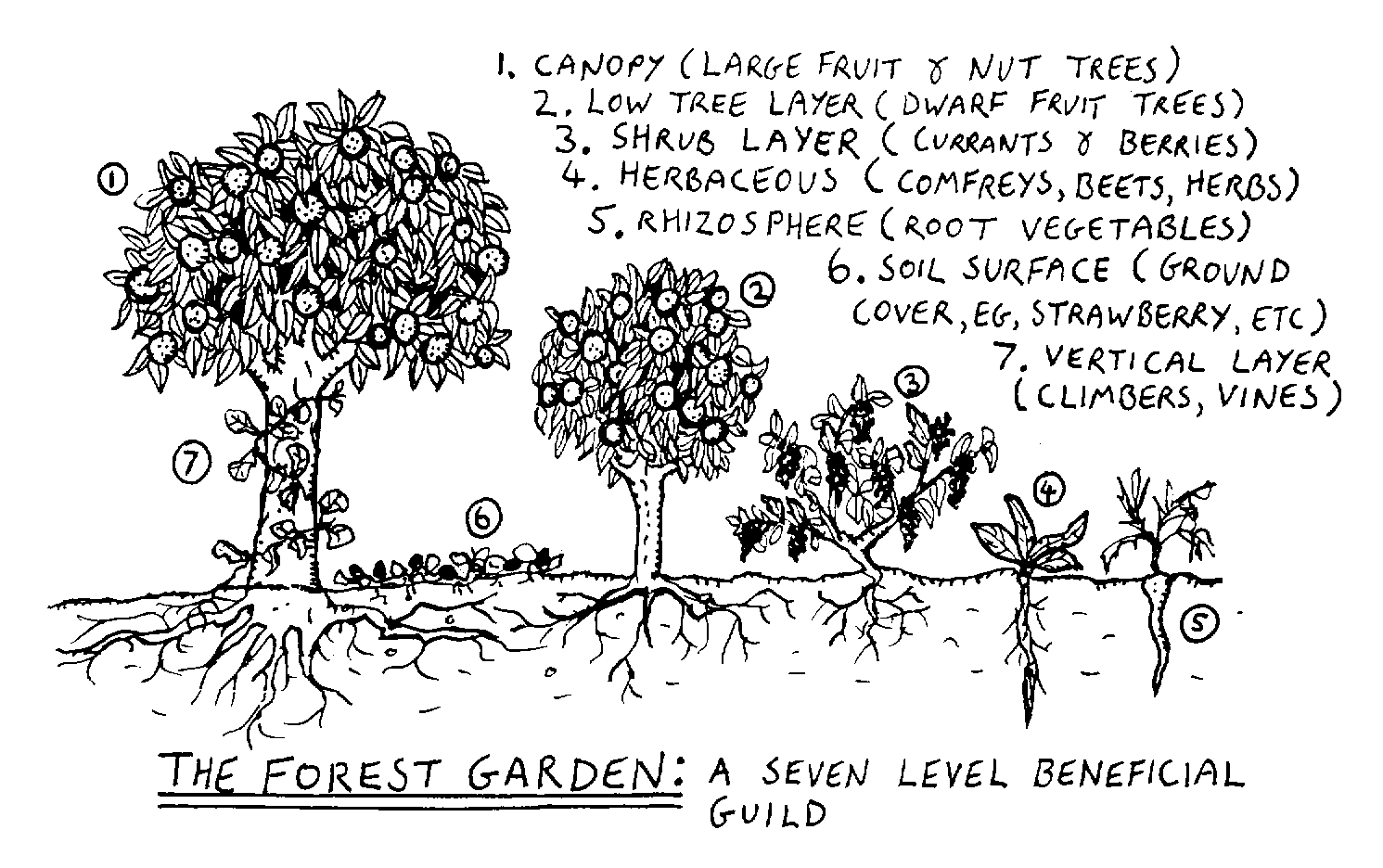
In response to Buckminster Fuller's words in that video, my imagination really fired up as I started to think about how I could use design to change the environment around me in such a way that would extend my internal functions and reorganise my environment so that it would work for me... so that it would, in the fullness of time, support me... as I think of my own future, I would like to eventually create a living system, by which I probably mean a forest garden, which I had designed after much studying and having made the tools to make the tools to make the tools.
https://upload.wikimedia.org/wikipedia/commons/2/27/Forgard2-003.gif
By going to this level of recursion it would be a bit slower for me but it should scale to work on the general analytical and algorithmic approach and be just as efficient or fast as if I had undertaken the problem as a 'solve for one, once'. As the vision of numerical gardening, open source farming tools and methodologies and building living systems and forest gardens as a long game / long view route to autonomy would encompass and engage many others to also work on the shared problems that we all face and then others might be able to do the same.
https://upload.wikimedia.org/wikipedia/commons/5/5d/Advanced_Automation_for_Space_Missions_figure_5-29.gif

I would like to secure the potential for my own freedom and the continuation of autonomy throughout my life rather than follow the life pattern which would seek to build a 'defensive structure' around me in Bucky's words... I also dismiss the pessimistic conclusion that activism or anarchy or 'being liberal' is the preserve of the young and that exploration and travelling is the rite of passage of the young and that slowing down or settling down is the inevitable conclusion or natural trend for anyone trying to have a family life. The truth is that the net closes as we ourselves choose to set the trap and we choose to fall into it. We choose to gradually limit our experiences and slow down. This is in our design as we 'prepare for the future' within the parameters and boundaries that are expected (think: 'build a career', 'saving for your pension'). This sounds like building a defensive structure and slowing down the rate of human experiences. I would rather live several lifetimes worth of experiences as Bucky suggests.

Resilience in Retirement
So why should my priorities change? How would my heart change as a function of age? I would like to exercise my choice and plan ahead for my own future in my own way. I would like to build a structure or plan for resilience in my own future which will allow me to continue to explore and learn and experience more, increasing the area in which I can move- being like the wheel and not the fortress which we supposed was to keep others out but which is actually a cage of our own making and designed to keep us in.

Hackers, Back to the Land
So imagine a process by which land that you want in a place that you like could be acquired. Not competing with any markets, or choosing somewhere trendy... just plain old unwanted / unused land in a country that you like.
https://upload.wikimedia.org/wikipedia/commons/e/e7/Vincent_van_Gogh_-_Green_Field_-_Google_Art_Project.jpg
Maybe a software agent would take your current bank account or savings or a projection and generate search hits and there would be a reporting feature...

You get lucky one day and then start to tend the land by using natural processes to get the land to become 'regenerated' and then a productive living system gradually over your lifetime and transformed from dead soil or useless land into living soil and a forest garden in which you have planted trees that take 15 or 20 years to grow and can then sustain / feed you.
https://upload.wikimedia.org/wikipedia/commons/d/d5/Forestgarden2.jpg

Tending the Garden and Watching it Grow
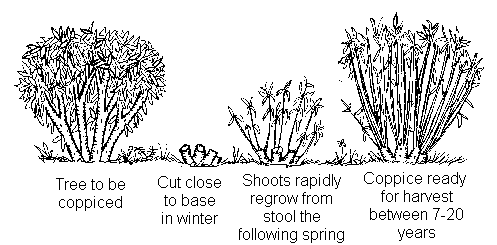
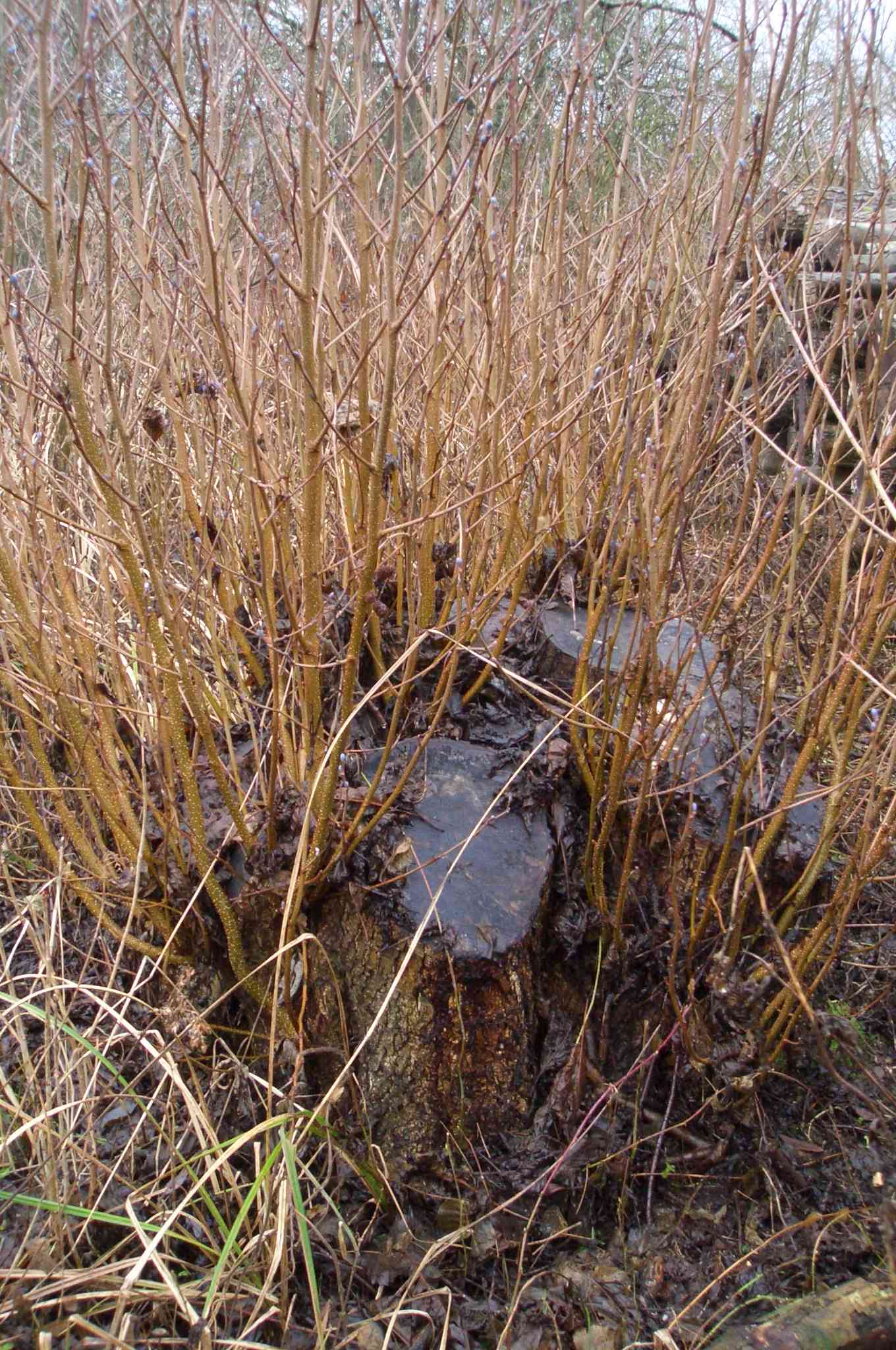
All the while you continue on with your normal life elsewhere in the city or travelling or whatever... but through well timed purposeful, organised planting, sowing, watching and community building it can yield food and fuel. Then your land has more value over time and you then kind of inherit it later in your own life as a living system that will support you and others with fuel and food.
https://upload.wikimedia.org/wikipedia/commons/4/46/Coppice2.png
https://upload.wikimedia.org/wikipedia/commons/5/5e/Coppice_stool2.JPG
Computational / 'CNC Gardening'
(did I just coin a new term? if so, yay!)
"Numerical control (NC) is the automation of machine tools that are operated by precisely programmed commands encoded on a storage medium, as opposed to controlled manually via hand wheels or levers, or mechanically automated via cams alone."
I would envisage that having acquired such land I would like to make a plan for it and I will have developed (at least a first / rough version) of some algorithmic / computational approach to gardening combined and fused with radical (but traditional) techniques of permaculture and living forests with calculations and site plans that I have made- obviously as a function of climate, soil type, USDA growing zone and local ecosystems etc.

Initial Conditions
Think of it as choosing the best 'initial conditions' for the natural progression and natural evolution and development of a 'living system' which could sustain a family / or a community that I would like to be part of later in my life.
https://upload.wikimedia.org/wikipedia/commons/e/e5/Gospers_glider_gun.gif

The way I would see it, I would attend the site at various points during my life to gently shape and guide the process but, for the most part, nature would take its course and the land and the system that would be developing there would be largely auto-catalytic and autonomous.
https://upload.wikimedia.org/wikipedia/commons/5/55/Sigmoid_curve_for_an_autocatalytical_reaction.jpg
The rate law for the second order autocatalytic reaction
A + B \; \stackrel{k}{\rightharpoonup} \;2B
is the following one
\ v = k[A][B].
The concentrations of A and B vary in time according to
[A]=\frac{[A]_0+[B]_0}{1+\frac{[B]_0}{[A]_0}e^{([A]_0+[B]_0)kt}}
and
[B]=\frac{[A]_0+[B]_0}{1+\frac{[A]_0}{[B]_0}e^{-([A]_0+[B]_0)kt}}.
The graph for these equations is a sigmoid curve, which is typical for autocatalytic reactions: these chemical reactions proceed slowly at the start because there is little catalyst present, the rate of reaction increases progressively as the reaction proceeds as the amount of catalyst increases and then it again slows down as the reactant concentration decreases. If the concentration of a reactant or product in an experiment follows a sigmoid curve, the reaction is likely to be autocatalytic.
Onto the next part in the video:
"We can see then how man could develop designs for keeping other men from bothering him by building a prison this would be a constrictive design and then he could design ways of helping human beings as for instance he notices of the great many automobile accidents and in the early days of the automobile accidents we used to put up more and more signs warning people that there's a dangerous area, we sent out more motorcycle policemen and had more traffic policemen. I saw that instead of trying to reform man, you could reform the environment. We could go in for divided highways, we could go in for split level highways, we could go in for appropriately banked turns so that people could get from here to there with great ease, they could be themselves, they would do logical things in relation to their natural physical senses and be able to get from here to there much more rapidly so that would be what I would call such highway design would be what I would call affirmative and 'degrees of freedom' increasing design in counter distinction to the stoplight, the sign which says slow down don't get there as fast, don't have as much life and then the very constrictive design of a prison which you say you are a dangerous driver and you have been a dangerous driver so long that I am going to take away your car and take away your motion and I am going to restrict you even more by saying that you can only move around within one acre here inside the prison so we see the design can, consciously understood, greatly enhance our species and it can be very fearfully used to constrict our freedoms and if not used at all can render us less effective than other species. What really distinguishes man from all other living species is the magnitude of which he has employed the design capability."

Thoughts on the Current Game
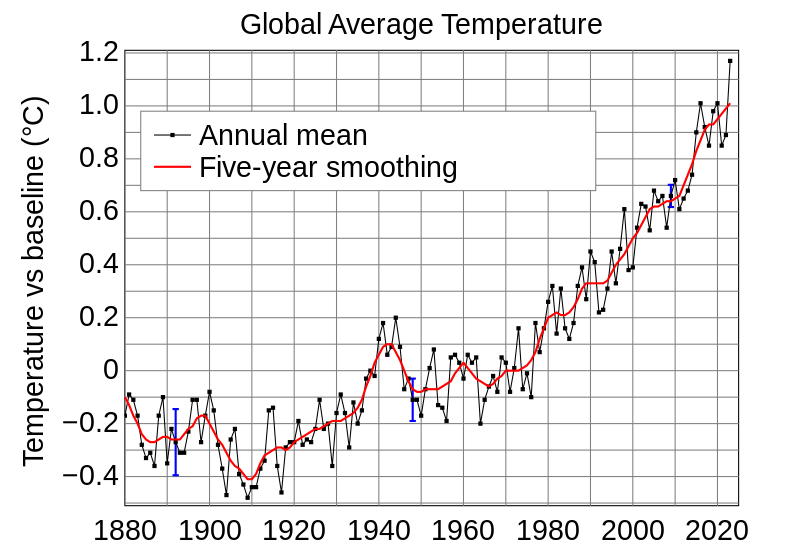
I relate to this in terms of how to think about man-made climate change and, in general, how to change the world through invention.
File:Global Temperature Anomaly.svg
-telling people to use less will not be the final solution. There are many many more of us coming.
-telling industries controlled by a capitalist system to turn less of nature into goods will not work. Their game is increase GDP and make 'more'.

A solution?
-use design to create and inform a gentle transition towards the highest energy output (maybe like Nocera's technology) for lowest environmental cost and make this the easiest path for industries to follow. The game here is essentially work to 'change the game' and inspire as many people as possible to do the same and help them to stop themselves working really hard on the wrong problems and make 'better' not 'more'.

Final thoughts from Factor e Farm and introducing a new Hackerspace


http://www.ecointeligencia.com/wp-content/uploads/2012/09/open-source-ecology.png

I have begun to tidy up my project areas at the Hablab at Factor e Farm, at the Open Source Ecology Project. It is two days before I am scheduled to fly back to Berlin which, by the way, is an enormous distance from here at around 4734 miles away.


I am reminded that over 5 weeks ago I did the same journey to get here and I have experienced and accomplished a lot since then, here is a link to my wiki work log: http://opensourceecology.org/wiki/Samthetechie_log and a photo of all my finished tickets from our (analogue) scrum board:


Yay for the Hablab!
I would also like to thank everybody that has previously worked on the hablab. I am sure my stay here was in relative luxury compared to when you were actually building the hablab! I saw the videos of its construction and it looked like really hard work!


The Story of HabLab: 2011-12 from Open Source Ecology on Vimeo.

I hope that during my stay I have left it a bit better than I found it (both the Torch Table and the Hablab) and that the next DPVs at the farm will do the same again. We are all giants standing on the shoulders of giants.

There have also been some real highlights of the trip that happened offsite:
Kansas City 2600 Meetup


Dropping in on a Friend 
Funnily enough the surprise was very much on me...


Hammerspace in Kansas City 
Visiting the local hackerspace!
 

FactorEFarm Hackerspace 
I hope that my time here has been useful to OSE and has been well spent and that the action of setting up a mini hackerspace is generative and makes the space more productive and I hope that the space will continue to exist at the farm and be built on by others. http://hackerspaces.org/wiki/FactorEFarm


An Invitation
I would also like to warmly invite all hackers, makers, engineers and others who are interested in working on the project remotely or indeed those who would consider applying to do a dedicated project visit and I am happy to speak to anyone who wants to know more about my experiences while I was a DPV here.

Jan 2014: CEB Press
The next meetup at Factor e Farm will be in January 2014 where people will be working on the CEB press I would be cool to come back out here with a team of Engineers (we need specialists in Electronics, Electrical and Mechnical Engineering- background in hydraulics would be a plus!) and also someone who is dedicated to taking photos, videos and is good at wiki editing / blog writing and documentation / storytelling.

Tuesday, 22 October 2013

The Aaron Swartz Memorial Hackathon

Image of Aaron Swartz by Fred Benenson. CC-Attrib 2.0
Less than a year ago, the death of Aaron Swartz shocked us with sadness. This young man, one of “our own”, gave in to despair and lost the biggest fight of all. His death reminded the activist community of our need to take care of each other even as it woke many in the world outside our community to some of the issues about which Aaron cared so deeply. In the wake of his death, people from all over the world gathered in hackathons to work on some of those very issues, and now we plan to come together again for Aaron’s birthday.

On the weekend of November 8-10, there will be simultaneous hackathons in San Francisco, Seattle, Austin, Chicago, Boston, Buenos Aires, Berlin and perhaps where ever you are, to celebrate the life of Aaron Swartz by working on projects relating to privacy, open data, open government, open science, or justice. Each location will pick one major topic or project to work on, something highly hackable with opportunities for people of any technical level to get involved. All products produced during the hackathon should be released with an open license. The global event coordinators recommend that videos and text be Creative Commons-licensed CC-By-SA, and code be licensed under the GPLv3.

Each event will start with a mini-unconference of one to two hours in which participants will be able to give lightning talks about the topic that the local event has chosen as its focus. People can present specific challenges related to the local topic, or inform the group about the local project, why it’s important or how it works. Wherever possible, these short talks will be recorded and streamed live so that remote participants and participants at other locations around the globe can see them. Once the talks have been given and the challenges discussed, the hacking will begin.

Normally the advice is that you can’t pull together a decent hackathon in less than a month, but this is different. If you do not live near one of the currently confirmed events, there is still time to organize an event in your area. The event need not be large, and if you don’t have time to find sponsors to feed your hackers, just make it a potluck. This is not a slick event. It is a memorial for someone we lost less than a year ago and a celebration of the activism that we share as a community.

If you are able to organize a local event, big or small, please visit the hackathon wiki page to learn more and contact aaronswhack@numm.org as soon as you have confirmed your location and time.

Wednesday, 31 July 2013

I quit Twitter: @samthetechie

I just quit Twitter https://twitter.com/samthetechie at https://ohm2013.org/


My digital privacy is very important to me so after the opening talk from @gmc at the Ohm2013 - Observe Hack Make hacker camp, I just quit Twitter. Many people are doing the same today. So please join us. Also, I am about to leave all social networks apart from Diaspora...Feel free to start a debate and ask me why below.

Today is the day, not tomorrow, not next week. I am here to help you to transition to Diaspora and other stuff. Just ask me any technical questions- I am happy to help.

I am also deleting facebook later so, if you *want* to actually stay in touch with me and invite me to stuff then send me an email and also please add me on Diaspora now: samthetechie@despora.de ‪#‎howto‬ ‪#‎diaspora‬ http://www.wikihow.com/Join-Diaspora

Saturday, 20 July 2013

Cryptoparty Handbook for Kindle

cryptopartykindle.jpg CryptoParty Handbook!

Cross-posted from: http://cryptoparty.blogspot.com/2013/07/cryptoparty-handbook-for-kindle.html

The CryptoParty Handbook tries to provide a comprehensive guide to the various topics that might come up while investigating the realms of computer and internet security and is designed to be a practical guide during Cryptoparties.

Get the Handbook

The book is written in markdown and then compiled into various formats. Download it as .pdf .mobi .epub or .md

Don't take any wooden nickels!

You should always check the fingerprint of downloaded files using commands like sha256sum and compare the resulting hashes against hashes provided by other sources. So if you spread the news about the book, please spread the hashes as well!
The following handbook files have been hashed using sha256sum as a post build step after make install is run on the handbook source code, the results are:
dc73608cc85186247e278a84cd85afcec6062325baf4ce87840d515a26a03b92
cryptoparty-handbook-2013-07-10.epub 
 
d8f440cf6d925c332decfcf4c01b0f73d323a59a6639cfd9f0d3c051927cf442
cryptoparty-handbook-2013-07-10.md 
 
33e46514a8e6b376155ad460aac8e7c704b6b849267b6fb2f80f9e84fc5e65e7
cryptoparty-handbook-2013-07-10.pdf 
 
9d46af4e2523865f300a6f86f9fd7824500417d98ff4512bb8a0a45aead66df5
cryptoparty-handbook-2013-07-10.mobi
 
(download)

Get the Saucecode

Writing the handbook is a group effort. For collaboration github is used. Although primarily used by programmers, github provides a very comfortable editor for markdown. Just register, clone the handbook repository, edit it and file a pull request (it is really not hard, just try it out).

Tell us what you think

Please submit bugs, issues, ideas and comments here: github

CryptoPartyHandbook for Kindle

We are thrilled to announce that the Cryptoparty Handbook is now Kindle-friendly. Please download .mobi .cover.jpg and metadata.opf and place all three files into your Calibre Library.